BRIGHTNESS430 cd/m²Typical
 RUNTIME24-724 h x 7 days
 VESA MOUNT200 x 100 mmVESA
 ORIENTAIONLands./PortraitMounting
21.5" Android touch panel PC with PoE, NFC-RFID and RGB LED bar
iiyama ProLite TW2225LAS-B3PNR
The iiyama ProLite TW2225LAS-B3PNR is a 21.5" all-in-one touch panel PC designed for high-traffic interactive environments such as meeting room panels, reception desks, visitor check-in kiosks, information points and digital signage installations. Running Android 16 on a Rockchip RK3576 octa-core processor with 64 GB storage, it operates as a fully self-contained unit — no external player or PC required. Power over Ethernet delivers both power and data through a single cable, dramatically simplifying installation. An integrated RGB LED bar provides at-a-glance room status signalling, while the built-in NFC-RFID reader enables contactless authentication, employee badging and app-driven interactions. Quad microphone and dual 5 W speakers round out the package for voice-enabled and interactive service applications. Rated for 24-7 continuous operation and compatible with iiSignage² CMS for centralised content management.

Single-Cable PoE Installation
The RJ45 port supports Power over Ethernet (IEEE802.3bat, up to 72 W), meaning a single network cable delivers both data connectivity and full operating power to the display. There is no need for a separate power outlet near the mounting location — a significant advantage when wall-mounting at reception desks, corridor information points or meeting room door panels where running mains cabling is disruptive or impractical. For end users this translates to a cleaner installation with fewer cables visible, easier moves or reconfigurations in the future, and a single network switch as the only infrastructure dependency.
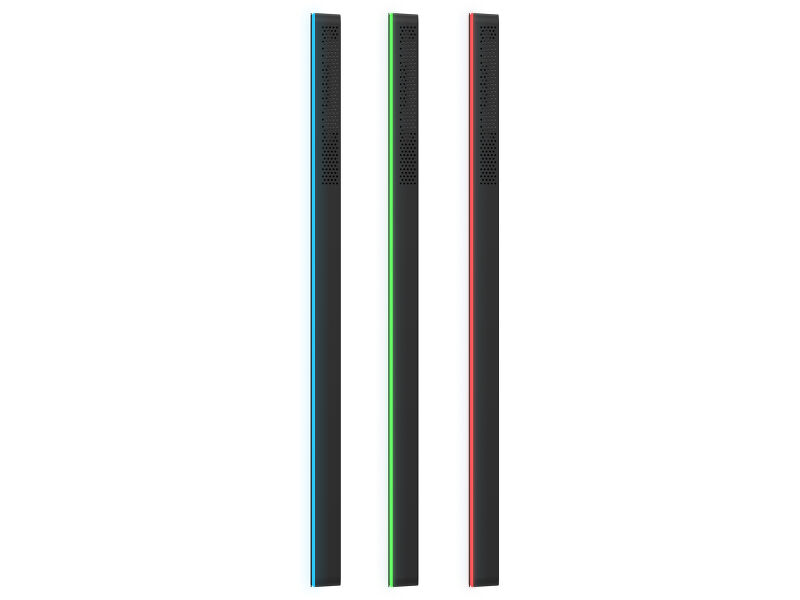
RGB LED Bar for Room Status Signalling
A full-colour RGB LED bar runs around the perimeter of the display and can be programmed to show any colour via app or API. The intended — and most common — use case is meeting room booking: green for available, red for occupied, amber for an upcoming reservation. The status is visible at a distance and even from angles where the screen itself is not readable, making it functional in narrow corridors or when the display is mounted at low height. The RGB output is also available for custom application logic, so integrators can tie it to access control events, queue management systems or any other app-driven trigger through the open API.
One cable. Full power. Touch, PoE, NFC and LED — all in 21.5".
Rated for 24-7 continuous operation · CE, RoHS, ErP, UKCA certified
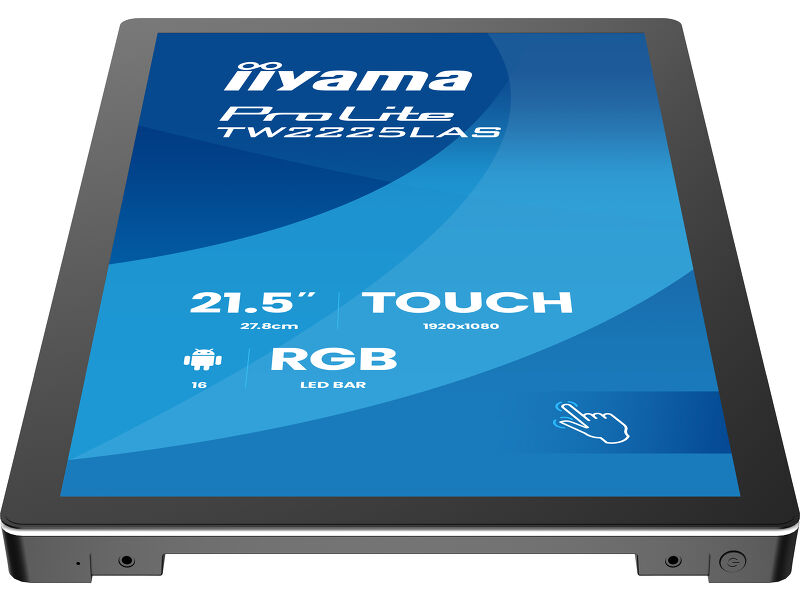
NFC and RFID Reader for Contactless Interactions
The built-in NFC module (NXP 7221) and 125 kHz RFID reader allow the device to read standard employee badges, MIFARE cards and NFC-enabled smartphones without any additional hardware. This makes the panel a natural fit for employee check-in, visitor registration, time-and-attendance logging or access-controlled information terminals — all within a single compact unit. Because both NFC and RFID are integrated at the hardware level, there are no external readers to cable, no driver conflicts and no desk clutter. Developers can access the reader through the Android API to build custom authentication or data-capture workflows.

Android 16 with Standalone Operation
The display runs Android 16 on a Rockchip RK3576 octa-core processor (4× Cortex-A53 + 4× Cortex-A72 at up to 2.2 GHz) with 4 GB LPDDR5X RAM and 64 GB eMMC storage. Applications install and run directly on the device — no external media player, mini-PC or signage player box is needed. This matters both for total cost and for ongoing maintenance: there is one fewer device to power, update and support in the field. Android's open ecosystem means the panel works with Play Store apps, custom APKs and purpose-built kiosk software alike. Kiosk mode is supported natively, locking the device into a single-app experience without user intervention.

iiSignage² CMS Integration
The TW2225LAS-B3PNR ships with iiSignage² pre-installed — iiyama's cloud-based content management system for scheduling, pushing and monitoring content across multiple displays from a single dashboard. For deployments with more than one panel (multi-room installations, corporate campuses, retail chains), this means content updates, playlist changes and emergency messaging can all be managed remotely without physically touching each unit. Displays can be grouped, individually targeted or scheduled on a calendar. The CMS also provides basic device health monitoring, helping support teams identify offline displays before end users report an issue.
Flexible Orientation and Mounting
The display supports landscape, portrait and face-up (table-top flat) orientations, with Android auto-rotation adapting the UI accordingly. The VESA pattern is 200 × 100 mm and the unit ships with a slide-on wall mount and integrated cable cover, so it can be installed neatly against a wall straight out of the box. Face-up mode is suited to counter-top or kiosk installations where users interact from directly above the screen — typical in hospitality check-in or retail self-service. The thin 27.5 mm chassis keeps the profile unobtrusive in portrait mode on a door-frame panel or a narrow pillar.

Wi-Fi 6 and Bluetooth 5.4 Connectivity
The integrated IEEE 802.11ax (Wi-Fi 6) radio provides faster throughput and better performance in congested RF environments compared with Wi-Fi 5, making it more reliable in office buildings or hospitality venues where many devices share the same wireless infrastructure. Bluetooth 5.4 extends peripheral connectivity options — useful for pairing a keyboard or barcode scanner during setup, or for app-driven interactions with BLE-tagged assets. Combined with the Gigabit PoE LAN port, the panel offers full redundancy between wired and wireless networking without needing any external adapters.

24-7 Rated with Anti-Image Retention
The panel is certified for continuous 24-7 operation and includes active anti-image retention technology, which periodically shifts or refreshes the image to prevent static content from burning into the display. This is a meaningful distinction for always-on deployments such as lobby information panels, unmanned kiosks or access-controlled corridors where the screen may display the same layout for many hours at a stretch. The rated MTBF is 50,000 hours, providing a statistical basis for lifecycle cost planning in commercial or institutional installations.